Buy astrologieforum.eu ?
We are moving the project
astrologieforum.eu .
Are you interested in purchasing the domain
astrologieforum.eu ?
domain@kv-gmbh.de · 0541-91531010
Buy astrologieforum.eu ?
When are ligands neutrally charged?
Ligands are neutrally charged when they have an equal number of positive and negative charges. This can occur when the ligand has a net charge of zero, such as in the case of water (H2O) or ammonia (NH3). Additionally, ligands can also be neutrally charged when they form coordinate covalent bonds with a metal ion, resulting in a neutral overall charge for the complex. **
What is the toughness of ligands?
The toughness of ligands refers to their ability to form stable coordination complexes with metal ions. Ligands with high toughness have strong bonds with the metal ion, making them less likely to dissociate from the complex. This property is important in determining the stability and reactivity of coordination complexes. Tough ligands are often used in catalysis and other applications where the complex needs to remain intact under harsh conditions. **


Similar search terms for Ligands
Top-Angebote
Products related to Ligands:
-
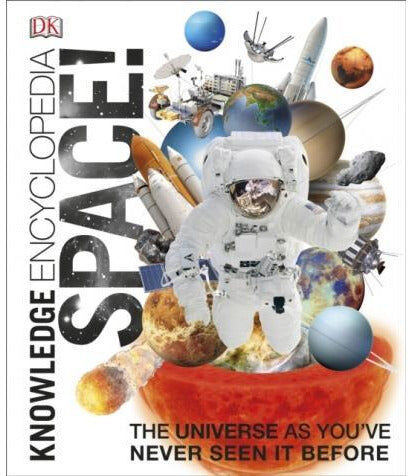
Dorling Kindersley DK Knowledge Encyclopedia Space The Ultimate Space & Astronomy Reference Guide for Kids and Families - Planets, Stars, Galaxies & the Universe ExplainExplore the wonders of the universe with the DK Knowledge Encyclopedia Space, an inspiring and visually stunning guide to outer space.Packed with high-definition photographs, 3D illustrations, infographics, facts, timelines, and scientific explanations, this encyclopedia takes readers on an unforgettable journey from Earth to the farthest reaches of the cosmos. Perfect for curious readers, young astronomers, and space enthusiasts, this book explains: The solar system, planets, moons, and dwarf planets Stars, nebulas, black holes, galaxies & cosmic phenomena Space exploration, astronauts & spacecraft The Big Bang, universe evolution & future missions The latest science discoveries explained in kid-friendly language A brilliant educational book for STEM learners, classrooms, home libraries, and children aged 8–14 who love space.9,99 £*Shipping: 2,99 £Secure redirect to the provider
-
Arcturus Children's Encyclopedia of Space by Giles Sparrow Visual Guide to the Universe, Planets, Stars & Solar System Astronomy Reference Book for KidsJourney beyond Earth and discover the wonders of the cosmos with Children's Encyclopedia of Space: A Visual Guide to the Universe by Giles Sparrow. Part of the Arcturus Children's Reference Library, this engaging visual encyclopedia introduces young readers to the fascinating world of space, astronomy and the universe. Explore the Solar System, planets, moons, stars, galaxies and other extraordinary objects in space while developing an understanding of the vast universe beyond our planet. Presented as an accessible visual reference guide, the book makes complex astronomical topics engaging and easier for young readers to explore. Ideal for children fascinated by planets, stars, space exploration and astronomy, this encyclopedia encourages curiosity and provides a useful resource for independent reading, homework, school projects and general knowledge. Whether learning about our neighbouring planets or exploring the mysteries of distant stars and galaxies, Children's Encyclopedia of Space is a valuable addition to any young space enthusiast's bookshelf. Key Features Engaging children's space encyclopedia Written by astronomy author Giles Sparrow A visual guide to the universe and outer space Explores planets, stars, moons, galaxies and the Solar System Introduces astronomy in an accessible format for young readers Ideal for school projects, homework and independent learning Part of the Arcturus Children's Reference Library Excellent educational gift for young space and science enthusiasts5,99 £*Shipping: 2,99 £Secure redirect to the provider
-
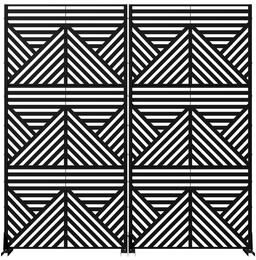
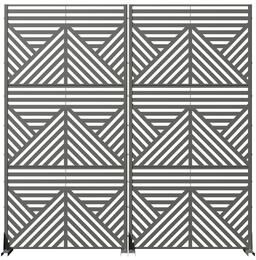
Dovelina Zodiac Metal Privacy Screen PanelAdd modern elegance and privacy to your space with our Privacy Screen Divider. Featuring an elegant pattern design, this screen enhances the aesthetics of indoor and outdoor areas while providing privacy protection.338,49 $*Shipping: 0,00 $Secure redirect to the provider


-
What is the chelating ability of ligands?
The chelating ability of ligands refers to their ability to form coordination complexes by binding to a central metal ion through multiple donor atoms. Ligands with chelating ability can form more stable complexes compared to monodentate ligands because they can wrap around the metal ion, forming a ring-like structure known as a chelate. This chelate structure enhances the stability of the complex by reducing the chances of other molecules displacing the ligand from the metal ion. Chelating ligands are commonly used in various fields such as medicine, environmental science, and industrial chemistry due to their ability to form stable and selective complexes with metal ions. **
-
What is the structural formula of ligands?
The structural formula of ligands can vary depending on the specific ligand, but in general, ligands are molecules or ions that have one or more lone pairs of electrons that can be donated to a metal ion. The structural formula typically includes the arrangement of atoms and lone pairs of electrons that are available for coordination to the metal ion. Ligands can be classified as monodentate, bidentate, tridentate, etc., depending on the number of donor atoms they have available for coordination. Overall, the structural formula of ligands reflects their ability to form coordination complexes with metal ions. **
-
How can one determine the toughness of ligands?
The toughness of ligands can be determined by their ability to form stable complexes with metal ions. Ligands with multiple donor atoms and strong donor atoms, such as nitrogen, oxygen, and sulfur, are generally tougher than ligands with fewer or weaker donor atoms. Additionally, the size and charge of the ligand can also affect its toughness, with larger and negatively charged ligands typically being tougher. Experimentally, the toughness of ligands can be determined by measuring the stability constants of the metal-ligand complexes they form. **
-
What is the number of ligands in coordination chemistry?
The number of ligands in coordination chemistry refers to the number of donor atoms in a molecule or ion that can bond to a central metal atom. The number of ligands can vary depending on the coordination number of the central metal atom. Common coordination numbers include 2, 4, 6, and 8, which correspond to complexes with 2, 4, 6, or 8 ligands, respectively. The coordination number and the number of ligands determine the geometry and overall structure of the coordination complex. **
What is the number of ligands in complex chemistry?
The number of ligands in complex chemistry refers to the number of molecules or ions that are bonded to a central metal atom. The number of ligands can vary depending on the coordination number of the metal atom, which is the total number of bonds formed with the ligands. Common coordination numbers include 2, 4, 6, and so on, which correspond to the number of ligands bonded to the central metal atom. The coordination number and the number of ligands play a crucial role in determining the geometry and properties of coordination complexes. **
Which factors influence the exchange rate of ligands in the complex?
The exchange rate of ligands in a complex is influenced by several factors. One key factor is the strength of the bond between the ligand and the central metal ion. Stronger bonds typically result in slower exchange rates. Additionally, the steric hindrance around the metal center can affect the exchange rate, with bulky ligands hindering the exchange process. The nature of the solvent and the temperature of the system can also impact the exchange rate of ligands in a complex. **
Top-Angebote
Products related to Ligands:
-
Funko Pop! Vinyl - Zodiac - LibraThis Funko Pop! Vinyl figure represents the Libra sign from the official Zodiac collection. It's designed in the trademark bobblehead format with a large head and body contrast that defines the brand's collectible identity. As part of a comprehensive astrological set, collectors may seek this piece to complete their horoscope lineup alongside the other star signs. The sturdy vinyl construction ensures longevity while maintaining a smooth finish suitable for daily viewing. This figure is a joyful representation of astrology, perfect for those born between September and October who are fans of the zodiac. It arrives pre-assembled in original packaging, making it ready for display or immediate unpacking. The figure's proportions align with standard Funko measurements, making it compatible with protective display cubes and shelving systems.12,69 £*Shipping: 3,95 £Secure redirect to the provider
-
Dorling Kindersley DK Knowledge Encyclopedia Space The Ultimate Space & Astronomy Reference Guide for Kids and Families - Planets, Stars, Galaxies & the Universe ExplainExplore the wonders of the universe with the DK Knowledge Encyclopedia Space, an inspiring and visually stunning guide to outer space.Packed with high-definition photographs, 3D illustrations, infographics, facts, timelines, and scientific explanations, this encyclopedia takes readers on an unforgettable journey from Earth to the farthest reaches of the cosmos. Perfect for curious readers, young astronomers, and space enthusiasts, this book explains: The solar system, planets, moons, and dwarf planets Stars, nebulas, black holes, galaxies & cosmic phenomena Space exploration, astronauts & spacecraft The Big Bang, universe evolution & future missions The latest science discoveries explained in kid-friendly language A brilliant educational book for STEM learners, classrooms, home libraries, and children aged 8–14 who love space.9,99 £*Shipping: 2,99 £Secure redirect to the provider
-
Arcturus Children's Encyclopedia of Space by Giles Sparrow Visual Guide to the Universe, Planets, Stars & Solar System Astronomy Reference Book for KidsJourney beyond Earth and discover the wonders of the cosmos with Children's Encyclopedia of Space: A Visual Guide to the Universe by Giles Sparrow. Part of the Arcturus Children's Reference Library, this engaging visual encyclopedia introduces young readers to the fascinating world of space, astronomy and the universe. Explore the Solar System, planets, moons, stars, galaxies and other extraordinary objects in space while developing an understanding of the vast universe beyond our planet. Presented as an accessible visual reference guide, the book makes complex astronomical topics engaging and easier for young readers to explore. Ideal for children fascinated by planets, stars, space exploration and astronomy, this encyclopedia encourages curiosity and provides a useful resource for independent reading, homework, school projects and general knowledge. Whether learning about our neighbouring planets or exploring the mysteries of distant stars and galaxies, Children's Encyclopedia of Space is a valuable addition to any young space enthusiast's bookshelf. Key Features Engaging children's space encyclopedia Written by astronomy author Giles Sparrow A visual guide to the universe and outer space Explores planets, stars, moons, galaxies and the Solar System Introduces astronomy in an accessible format for young readers Ideal for school projects, homework and independent learning Part of the Arcturus Children's Reference Library Excellent educational gift for young space and science enthusiasts5,99 £*Shipping: 2,99 £Secure redirect to the provider
-
When are ligands neutrally charged?
Ligands are neutrally charged when they have an equal number of positive and negative charges. This can occur when the ligand has a net charge of zero, such as in the case of water (H2O) or ammonia (NH3). Additionally, ligands can also be neutrally charged when they form coordinate covalent bonds with a metal ion, resulting in a neutral overall charge for the complex. **
-
What is the toughness of ligands?
The toughness of ligands refers to their ability to form stable coordination complexes with metal ions. Ligands with high toughness have strong bonds with the metal ion, making them less likely to dissociate from the complex. This property is important in determining the stability and reactivity of coordination complexes. Tough ligands are often used in catalysis and other applications where the complex needs to remain intact under harsh conditions. **
-
What is the chelating ability of ligands?
The chelating ability of ligands refers to their ability to form coordination complexes by binding to a central metal ion through multiple donor atoms. Ligands with chelating ability can form more stable complexes compared to monodentate ligands because they can wrap around the metal ion, forming a ring-like structure known as a chelate. This chelate structure enhances the stability of the complex by reducing the chances of other molecules displacing the ligand from the metal ion. Chelating ligands are commonly used in various fields such as medicine, environmental science, and industrial chemistry due to their ability to form stable and selective complexes with metal ions. **
-
What is the structural formula of ligands?
The structural formula of ligands can vary depending on the specific ligand, but in general, ligands are molecules or ions that have one or more lone pairs of electrons that can be donated to a metal ion. The structural formula typically includes the arrangement of atoms and lone pairs of electrons that are available for coordination to the metal ion. Ligands can be classified as monodentate, bidentate, tridentate, etc., depending on the number of donor atoms they have available for coordination. Overall, the structural formula of ligands reflects their ability to form coordination complexes with metal ions. **
Similar search terms for Ligands
-
Dovelina Zodiac Metal Privacy Screen PanelAdd modern elegance and privacy to your space with our Privacy Screen Divider. Featuring an elegant pattern design, this screen enhances the aesthetics of indoor and outdoor areas while providing privacy protection.338,49 $*Shipping: 0,00 $Secure redirect to the provider
-
How can one determine the toughness of ligands?
The toughness of ligands can be determined by their ability to form stable complexes with metal ions. Ligands with multiple donor atoms and strong donor atoms, such as nitrogen, oxygen, and sulfur, are generally tougher than ligands with fewer or weaker donor atoms. Additionally, the size and charge of the ligand can also affect its toughness, with larger and negatively charged ligands typically being tougher. Experimentally, the toughness of ligands can be determined by measuring the stability constants of the metal-ligand complexes they form. **
-
What is the number of ligands in coordination chemistry?
The number of ligands in coordination chemistry refers to the number of donor atoms in a molecule or ion that can bond to a central metal atom. The number of ligands can vary depending on the coordination number of the central metal atom. Common coordination numbers include 2, 4, 6, and 8, which correspond to complexes with 2, 4, 6, or 8 ligands, respectively. The coordination number and the number of ligands determine the geometry and overall structure of the coordination complex. **
-
What is the number of ligands in complex chemistry?
The number of ligands in complex chemistry refers to the number of molecules or ions that are bonded to a central metal atom. The number of ligands can vary depending on the coordination number of the metal atom, which is the total number of bonds formed with the ligands. Common coordination numbers include 2, 4, 6, and so on, which correspond to the number of ligands bonded to the central metal atom. The coordination number and the number of ligands play a crucial role in determining the geometry and properties of coordination complexes. **
-
Which factors influence the exchange rate of ligands in the complex?
The exchange rate of ligands in a complex is influenced by several factors. One key factor is the strength of the bond between the ligand and the central metal ion. Stronger bonds typically result in slower exchange rates. Additionally, the steric hindrance around the metal center can affect the exchange rate, with bulky ligands hindering the exchange process. The nature of the solvent and the temperature of the system can also impact the exchange rate of ligands in a complex. **
* All prices are inclusive of VAT and, if applicable, plus shipping costs. The offer information is based on the details provided by the respective shop and is updated through automated processes. Real-time updates do not occur, so deviations can occur in individual cases. ** Note: Parts of this content were created by AI.